


The narrative of global trade between India and the West was long written in stone: Western conglomerates owned the intellectual property and the heritage brands, while Indian companies supplied the cheap labor and raw materials. It was a vertical relationship - price maker and price taker. But that script has been shredded. We are now witnessing a structural “Reverse Trade Flow,” where Indian mid-cap companies - lean, cash-rich, and operationally efficient, are acquiring the very Western giants that once dominated them.
This isn’t entirely new; the Tata Group set the precedent way back in 2008 with their widely famous acquisition Jaguar Land Rover (JLR) for $2.3 billion. At the time, critics scoffed at a truck maker running a luxury marquee. Yet, Tata turned JLR around, proving that Indian stewardship could revitalize distressed Western assets. But while the Tata-JLR deal was a play by a massive corporate house, the new wave is different. It is led by mid-sized family businesses, the “lions in the jungle” who are far smaller but hungrier. They are executing a sophisticated financial and operational arbitrage: buying distressed global assets at discounted (sometimes steeply discounted) valuations to acquire two things they cannot build overnight - a heritage brand and market access.
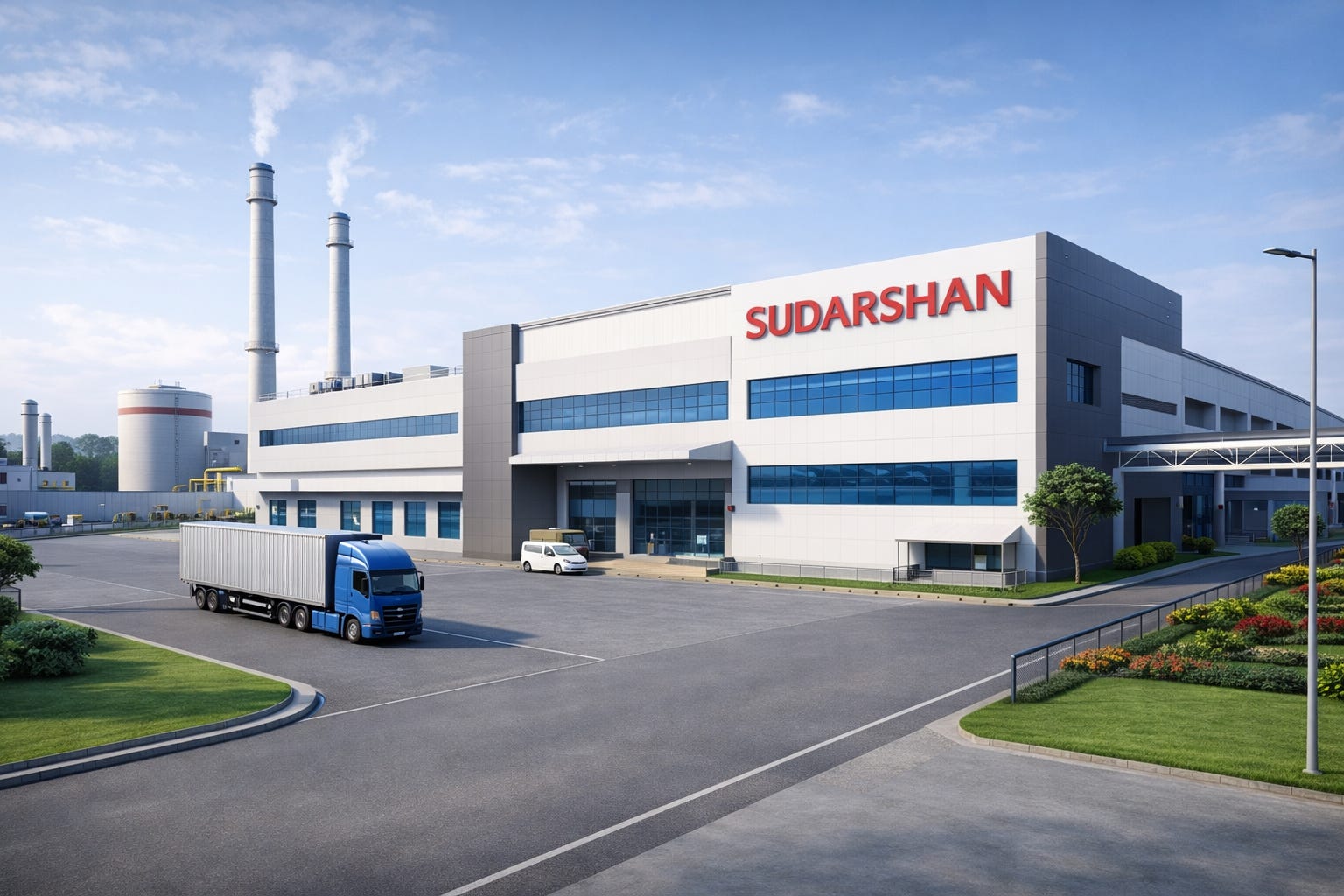
The Lion: Sudarshan Chemical Industries
To understand the magnitude of this trend, one must look at Sudarshan Chemical Industries Ltd. (SCIL). Founded in 1952 in Pune by the Rathi family, Sudarshan didn’t start as a global predator. For decades, it was a conservative player, manufacturing basic inorganic pigments to help a newly independent India reduce its reliance on expensive imports.
In 1990, Sudarshan formed a strategic 16-year joint venture with Japan’s Dainippon Ink & Chemicals (DIC). This partnership was a technological catalyst, providing the high-end R&D and manufacturing know-how needed to produce sophisticated organic pigments like phthalocyanines. It transitioned Sudarshan from a domestic supplier into a quality-driven manufacturer capable of meeting rigorous global standards.
However, under the third-generation leadership of Rajesh Rathi, the company pivoted. In 2007 Sudarshan and DIC mutually decided to end their joint venture. What makes it noteworthy is that Sudarshan had an exclusive global distribution agreement with DIC which contributed to almost 60% of their revenue at the time.
They realized that the domestic market was a safety net, not a ladder. In a bold move, Sudarshan shed unrelated businesses (like agrochemicals) to become a pure-play pigment manufacturer. They moved up the value chain, shifting from commodity-grade “azo” pigments (used in basic inks) to high-performance, complex pigments used in automotive coatings, cosmetics, and electronics.
This relentless focus on “color competence” (technical mastery of pigment chemistry) allowed them to quietly become the fourth-largest pigment player globally, commanding a 35% market share in India even before their defining move.
The Jungle: A Sector in Flux
The global pigment industry (estimated to be a $31.4 billion as of 2024) has historically been considered to be a fortress of European giants like BASF, Clariant, and Heubach, behemoths that color everything from your car to your eyeliner. These companies held the patents, the high-margin clients, and the prestige.
However, the last decade has fundamentally broken the “European Advantage,” creating a vulnerability that Indian firms were perfectly positioned to exploit.
This “perfect storm” was driven by three specific, compounding pressures:
The Energy-Price Arbitrage: For 24/7 chemical plants, natural gas is both an energy source and a primary feedstock. Following the Russia-Ukraine war, German gas import prices at their 2022 peak reached nearly 10 times their 2021 average. While prices have since cooled, they remain structurally higher than in the US or Asia. This created a “margin bleed” where the cost of simply keeping a German kiln running often exceeded the market value of the pigment it produced.
The Regulatory Squeeze: Europe’s REACH (Registration, Evaluation, Authorisation and Restriction of Chemicals) framework is arguably the world’s strictest environmental regime. While it drives safety, it has imposed an “Innovation Tax.” Every new or existing pigment requires exhaustive, multi-million dollar dossiers for compliance. For European firms, this turned high-performance chemistry into a defensive battle of cost-management rather than offensive R&D.
The “Hollowing Out” Theory: Industry analysts suggest a deeper trend: the de-industrialization of the European mid-market. As major chemical conglomerates (like BASF) pivot toward high-value specialties or move production to China and North America, mid-sized European champions like Heubach were left behind. Without the massive capital of a conglomerate or the low-cost base of a developing economy, these “heritage” players became trapped - holding world-class IP but possessing no profitable way to manufacture it.
While European firms were fighting for survival, Indian players like Sudarshan were refining their processes. They benefited from an “Emerging Market Premium” which was the ability to build state-of-the-art, REACH-compliant facilities at a fraction of the capital expenditure required to retro-fit a 100-year-old plant in Frankfurt. This created the ultimate opening for the Sudarshan-Heubach deal: a transfer of legendary German IP to a more viable, Indian-managed production ecosystem.
The Roar: Acquisition
The global industry was caught off guard in 2024 when Sudarshan Chemical announced it had signed a definitive agreement to acquire the Heubach Group. For a mid-cap Indian firm to shop for a 200-year-old German titan was not “inevitable” - it was an audacious move that few saw coming. The deal, which reached its final closing in March 2025, fundamentally reordered the global pigment hierarchy.
The opportunity arose from a spectacular fall from grace. Just two years prior, Heubach had teamed up with private equity firm SK Capital to acquire Clariant’s pigment business for approximately €800 million, a move intended to cement its position as the world’s second-largest player. However, this massive expansion was fueled by heavy debt. When the energy crisis spiked and interest rates climbed, Heubach found itself “over-leveraged and under-oxygenated.” By April 2024, the group’s German arm was forced into insolvency proceedings in the Braunschweig court.
This was the opening Sudarshan needed. While 14 other global entities (including top-tier strategic rivals and private equity firms) reportedly circled the carcass, Sudarshan emerged as the winner. The specific names of all 14 losing bidders remain shielded by the confidentiality of the German insolvency proceedings; industry reports confirm that Sudarshan outperformed a field of established international predators to secure the 200-year-old giant.
To truly understand the Sudarshan-Heubach acquisition, one must look past the sticker price. This wasn’t a standard corporate purchase; it was a surgical “rescue-and-rebuild” operation designed to bypass the debt that killed the German giant.
The Deal Specs: Arbitrage in Action
Sudarshan acquired Heubach for an upfront consideration of approximately €127.5 million (₹1,180 Cr). At first glance, this is a staggering bargain - buying a company with nearly €1 billion (₹9,000 Cr) in revenue for just 0.2x sales.
However, the “true” cost of the deal was nearly double that. To successfully restart the stalled German engine, Sudarshan committed to an additional €100 million (₹925 Cr) infusion for working capital and restructuring. Altogether, Sudarshan’s total commitment was closer to ₹2,100–₹2,400 Cr - nearly equal to its own entire balance sheet size at the time.
The transaction was a complex “asset-plus-share” deal: Sudarshan purchased the assets of the insolvent German entities through a court-appointed administrator while simultaneously acquiring the shares of Heubach’s solvent international subsidiaries. This structure allowed Sudarshan to “cherry-pick” the operations and the brand without inheriting the crippling legacy debt that had sunk the German major in the first place.
The Structure: Cherry-Picking the Future
The deal’s genius lay in its “Asset-plus-Share” hybrid structure, which acted as a legal firewall:
Asset Purchase: In Germany, Sudarshan bought only the assets and operations from the insolvency administrator. This allowed them to leave Heubach’s crippling legacy debt, the “final nail in the coffin” from its own failed Clariant acquisition, behind in the bankruptcy estate.
Share Purchase: Simultaneously, Sudarshan bought 100% of the shares of Heubach’s solvent international subsidiaries (like those in the USA and Luxembourg).
The India Open Offer: Since Heubach owned a listed Indian entity (Heubach Colorants India), the deal triggered a mandatory open offer for an additional 26% stake, adding another ~₹350 Cr to the potential total outlay.
The War Chest: How a Mid-Cap Paid for a Giant
To fund this “Reverse Crusade,” Sudarshan didn’t just bank on debt; they executed a high-speed capital raise to keep their leverage in check:
Equity (QIP): Immediately after the announcement, Sudarshan launched a Qualified Institutional Placement (QIP), raising ₹1,000 Cr from major domestic institutions and mutual funds.
Promoter Skin in the Game: The Rathi family personally signaled their confidence by subscribing to ₹100 Cr in convertible warrants.
Strategic Debt: The remaining balance (approx. ₹1,600 Cr) was secured via new debt. Crucially, Sudarshan negotiated a 15-month moratorium with a “ballooning” repayment schedule starting only in September 2027.
This financial engineering gave Sudarshan exactly what it needed: two years of breathing room to integrate the German IP and shift manufacturing to India before the first major debt checks came due.
The Beautiful Vision: Growing beyond India
‘Sudarshan’ is a word emerging from Sanskrit that translates loosely to ‘beautiful or good vision’. Sudarshan Chemicals has embodied the spirit indeed and displayed its beautiful vision through this deal.
“Our ambition was simple: if we couldn’t make a business world-class or attain global leadership, we exited. For years, we focused on organic growth to become the most profitable pigment company in the world. But we knew the next phase had to be inorganic - the Heubach Group deal was that once-in-a-lifetime golden opportunity to catapult us into the global top three.”
- Rajesh Rathi (July 2025), Managing Director, Sudarshan Chemical Industries
The acquisition led Sudarshan to grow its topline from circa $285 Million to a staggering $1.4 Billion.
The Global Footprint: 19 Sites of Strategic Power
Post-acquisition, Sudarshan has transformed from a Pune-based manufacturer into a truly borderless entity with 19 manufacturing sites across the globe. This diversified asset footprint includes 17 inherited from Heubach and its previous Clariant integration, covering every major trade bloc from the Americas to APAC. Crucially, the deal included Heubach’s crown jewel: the Frankfurt Hoechst Industrial Park facility in Germany. While Sudarshan’s domestic plants in Roha and Mahad remain the high-volume engines, these European and American sites serve as high-tech “Solution Centers” positioned directly next to global automotive and cosmetic headquarters. This physical proximity allows Sudarshan to offer “just-in-time” supply chains to Western clients while insulating the company from the geopolitical and logistic risks that often plague purely Asian-based exporters.
The Integration: Shifting the Weight to Win
The “Masterstroke” of Sudarshan’s integration strategy is a ruthless optimization of the cost-per-kilogram. Under the leadership of Rajesh Rathi, the company is implementing a “Two-Track” manufacturing model.
Track one involves keeping the highly complex, IP-sensitive Specialty Pigments in the Frankfurt headquarters and other Western sites, leveraging the deep technical expertise of German technocrats.
Track two, however, is where the profit lies: shifting the labor-intensive production of commodity pigments and intermediates to Sudarshan’s cost-efficient Indian facilities. By moving approximately 70% of the volume to low-cost bases while maintaining the “Made in Germany” prestige for high-end applications, Sudarshan expects to reclaim Heubach’s lost margins within 24 months.
The Arbitrage: Why This is a Masterstroke
This deal is far more than a simple acquisition; it is a structural arbitrage play that allows Sudarshan to bypass decades of market-entry barriers through two specific levers:
Bypassing the “Sticky” Client Barrier: In high-stakes industries like automotive coatings, pigments aren’t just supplies; they are mission-critical components. Global auto giants (OEMs) subject every new pigment to a 5-to-7-year qualification cycle to ensure “color permanence”—essentially proving the paint won’t fade or peel after a decade of exposure to sun, salt, and acid rain. By acquiring Heubach, Sudarshan didn’t just buy factories; it “inherited” a pre-qualified customer list of the world’s most demanding blue-chip manufacturers, instantly leapfrogging a half-decade waiting period.
The “India-Made, German-Sold” Model: Sudarshan is implementing a classic production-arbitrage strategy. It plans to keep the prestigious Heubach and Clariant brand names and high-end sales offices in Europe to maintain Western pricing power. Meanwhile, it is aggressively shifting the “heavy lifting” - the high-volume manufacturing of commodity pigments and intermediates, to its technologically advanced, low-cost plants in Roha and Mahad (India). This captures the high margins of a German brand while running on the lean operational cost-base of an Indian mid-cap.
The Immediate Verdict: Q1 FY26 Financials
The stock market’s initial skepticism has been largely silenced by the first set of post-merger results. In September 2025, Sudarshan reported its Q1 FY26 consolidated financials, and the numbers are a testament to the “scale-up” effect:
Revenue Explosion: Consolidated revenue skyrocketed by 295% year-on-year, jumping from ₹634 Cr to ₹2,507 Cr in a single quarter.
Profit Resilience: Despite the massive costs of integrating 17 overseas plants, Profit After Tax (PAT) surged by 87% to ₹55 Cr (up from ₹29 Cr).
Operational Scale: The “Others” segment remains a footnote, as the Pigments division now accounts for nearly ₹2,457 Cr of the quarterly topline, confirming Sudarshan’s status as a pure-play global giant
The New Era
The Sudarshan-Heubach deal signals the final expiration of the “low-cost supplier” tag that has long shadowed Indian manufacturing. For decades, Indian firms were the back-office or the factory floor - essential but invisible. Today, the script has flipped. Mid-cap companies are no longer content with a seat at the table; they are buying the table itself.
By leveraging clean balance sheets to absorb distressed Western icons, firms like Sudarshan are birthing a new breed: the “Micro-Multinational.” These are entities that combine the agility and cost-discipline of a family-run Indian business with the heritage, R&D, and market proximity of a Western legacy brand.
This”Reverse Trade Flow”is more than just a series of transactions; it is a structural realignment of global industrial power. As Indian firms integrate German engineering with Pune’s operational efficiency, they aren’t just participating in the global market - they are painting it in Indian colors.